Diarrhea During GLP-1 Treatment: What to Know
What to do about diarrhea on semaglutide or tirzepatide: the signs of dehydration and other warning signs that need prompt care, how to stay hydrated, and what to tell your clinician.
On this page
The short answer
Diarrhea is a listed side effect of both semaglutide and tirzepatide, and the main risk is losing too much fluid. Replace fluids and electrolytes as you go, and talk with a doctor right away if you have severe abdominal pain, black or bloody stools, frequent vomiting, signs of dehydration, a high fever, six or more loose stools a day, or diarrhea lasting more than two days. Tell your prescriber either way, because they decide whether anything about your treatment should change.
When does diarrhea on a GLP-1 need prompt care?
Talk with a doctor right away if diarrhea comes with any of the following. NIDDK lists these as reasons not to wait: 1
| What you notice | Why it matters |
|---|---|
| Severe pain in your abdomen or rectum | A sign of a more serious problem than a loose stool. 1 |
| Black, tarry stools, or stools with red blood or pus | Needs evaluation, not home treatment. 1 |
| Frequent vomiting, or a change in mental state such as unusual lack of energy | Both appear on NIDDK's list of symptoms to take to a doctor right away. 1 |
| Signs of dehydration: extreme thirst or dry mouth, urinating less than usual, dark urine, dizziness | Diarrhea can become dangerous if it leads to severe dehydration. 1 |
| Diarrhea lasting more than 2 days, a high fever, or six or more loose stools in a day | Additional reasons for adults to call a doctor. 1 |
Get medical help right away if you are confused, faint, are not urinating at all, or have a rapid heartbeat or rapid breathing alongside dehydration symptoms. 5 The medication labels add their own signals: for semaglutide, ongoing pain in the upper left or middle of the stomach that may spread to the back, decreased urination, or severe stomach or intestinal problems; for tirzepatide, stomach pain that will not go away, with or without vomiting. 3 4 If you feel seriously unwell, get care rather than trying to match your symptoms to a table first.
NIDDK also notes that people who are over 65, take antibiotics, or have a weakened immune system are more likely to have health problems from diarrhea and should keep in touch with their doctor. 1
Is diarrhea a known side effect of semaglutide and tirzepatide?
Yes. Both labels list diarrhea alongside nausea and vomiting among the side effects to tell your doctor about if they are severe or do not go away. 3 4 That tells you diarrhea is a recognized effect of these medicines. It does not tell you that yours is harmless, or that the medicine is the cause. For the wider picture, see our GLP-1 side effects overview, and for what to have ready in the first weeks, our first 90 days planner.
Could something other than the medicine be causing it?
Possibly. NIDDK names viral gastroenteritis, food poisoning, and medicine side effects as the most common causes of acute diarrhea. 1 Antibiotics, magnesium-containing antacids, and liquid medicines with sugar alcohols such as sorbitol can also cause it, and sugar alcohols in sugar-free candies and gum may do the same. 1 Lactose or fructose intolerance can too. 1
This matters because a fever, bloody stools, or a household full of people with the same symptoms points away from a medication effect. Tell your clinician about any new medicine, supplement, sugar-free product, or recent travel. Only a clinician can sort out the cause for you.
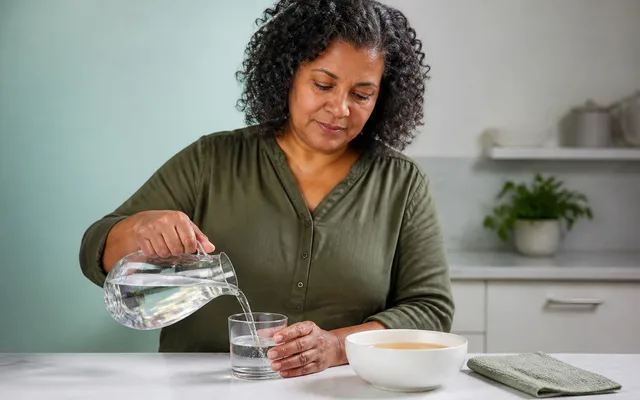
How do you stay hydrated with diarrhea?
Replace what you lose. NIDDK advises drinking plenty of water and liquids that contain electrolytes, such as broths and sports drinks, or oral rehydration solutions. 2 If you are older, have a weakened immune system, or have diabetes, kidney disease, or another health condition, talk with your doctor before using oral rehydration solutions, because the right solution or amount may differ for you. 2
A smaller appetite makes this easier to miss, because you may not feel like drinking or eating. Dehydration develops when you lose more fluid than you take in. 5 The semaglutide label tells you to let your doctor know if you have recently had diarrhea, nausea, or vomiting, or cannot drink liquids by mouth, because these may cause dehydration. 3
Use this as a daily check while you have diarrhea:
| Check | Reassuring | Call your clinician if |
|---|---|---|
| Urine | Pale, and you are passing it as usual | Dark, or you are urinating much less than usual 5 |
| Thirst and mouth | Normal | Extreme thirst or a dry mouth 1 |
| How you feel standing up | Steady | Dizzy, lightheaded, or unusually tired 5 |
| Keeping fluids down | You can drink and keep it down | Frequent vomiting, or you cannot drink enough 1 |
| Duration | Easing | Lasting more than 2 days, or six or more loose stools in a day 1 |
"Reassuring" here means no warning sign today, not that your diarrhea is harmless. It is not medical advice about your own case.
What about eating and over-the-counter medicine?
NIDDK says appetite may drop for a short time and that when it returns you can usually go back to your normal diet, even while diarrhea continues. 2 For ideas that suit a smaller appetite, our food guide has more.
NIDDK says over-the-counter medicines such as loperamide and bismuth subsalicylate are safe for most acute diarrhea, but doctors typically recommend against them if you have bloody stools or a fever, and you should see a doctor if diarrhea gets worse or lasts more than 2 days while you take one. 2 Because you are on a prescription medicine, ask your pharmacist or clinician before adding one. NIDDK also notes that many doctors and professional societies do not think the evidence supports probiotics for treating or preventing diarrhea, and advises talking with your doctor before using them. 2
If constipation alternates with diarrhea for you, our constipation article covers the other end, and our nausea guide covers nausea that comes with it.
What should you tell your clinician?
- When it started, and whether it began after a new medicine, a dose change your prescriber made, or a meal you suspect
- How often: stools per day, and whether it is watery, bloody, black, or greasy
- Other symptoms: pain, fever, vomiting, dizziness, or urinating less
- What you have taken: fluids, rehydration solutions, loperamide or anything else, and for how long
- Your exact medication, copied from the label, and any other medicines or supplements
Ask what would make it urgent in your situation, and whether your next dose should be handled any differently. Do not decide that on your own. This article does not cover dosing.
Common questions
Does diarrhea mean my dose is too high?
This article cannot say, and you should not change a dose because of a side effect. Report it, and let your prescriber decide whether anything about your plan should change. 3 4
Will it go away on its own?
NIDDK says most acute diarrhea goes away on its own, which is why duration matters: diarrhea lasting more than 2 days, or getting worse, is a reason to call. 1 2
Can I keep taking my medicine while I have diarrhea?
That is your prescriber's decision, not something an article can settle. If you are dehydrated or cannot keep fluids down, contact a clinician now rather than waiting for your next scheduled dose, and ask what to do about that dose.
References
- Symptoms & Causes of Diarrhea — National Institute of Diabetes and Digestive and Kidney Diseases
- Treatment of Diarrhea — National Institute of Diabetes and Digestive and Kidney Diseases
- Semaglutide Injection — MedlinePlus, U.S. National Library of Medicine
- Tirzepatide Injection — MedlinePlus, U.S. National Library of Medicine
- Dehydration — MedlinePlus, U.S. National Library of Medicine
For your information. This article provides general education and does not replace medical advice or an individual evaluation. Talk to your clinician before starting, changing, or stopping treatment. Compounded medications are not FDA-approved.